AIDBIGEASYARTISTS&MUSICIANS
|
||
|
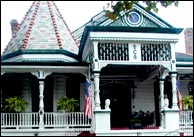
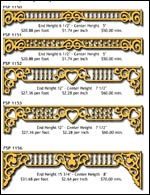
Rebuilding New Orleans Thinking Inside and Outside the Box: A Plan for Houses and Jobs from Aidbeam I. Housing: Rethinking the Vernacular These two conditions are of special concern to artists and musicians for whom gentrification would mean an eviction notice. In New York, the process of gentrification forced many artists to move —but just across the rivers to Hoboken and Brooklyn, both still within a short commute to the city center. There is no such megalopolis nor transportation infrastructure to The problem, as conventional wisdom would state it, is rebuilding traditional New Orleans “gingerbread” shotguns, doubles and camelbacks would be prohibitively expensive because of the amount of “workmanship” involved. This is wrong—it is based on a misconception of the actual building and design processes used to originally construct these “vernacular” New Orleans structures. These houses are essentially “decorated boxes” and were considered so when being built—a simple woodframe structure with decoration added that was ordered from a catalog of standardized mass-produced gingerbread from a millworks such as still exists in Sulphur Springs, Louisiana.
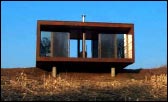
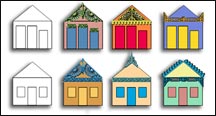
II. Housing: 1 from Column A, 1 from Column B It’s an easy concept: A row of modules is a shotgun. Two rows are a shotgun double. A row of Construction firms, allied or partnered with architects, already design and sell earthquake and hurricane proof pre-fabricated modular housing for as low as $45,000.
Economics of scale is not the only benefit of mass-production. Current Technology would allow for standard-sized wall, ceiling and roof panels (SIPs or Structural Insulated Panels up to 14’ by 30’) pressure and/or heat molded out of a mixture of III. Jobs: Kickstarting a New Industry We could build these houses in New Orleans and kill 4 birds with one stone. 1. The houses are cheaper (shipping being a major cost.)
Local architectural and engineering firms would be brought into the process. The experience of large industrial facilities such as Avondale and Michoud will be invaluable. The project could be a public/private consortium funded by an ipo and issuance of municipal/state bonds. The city could use the bond revenue to purchase a majority share of the stock. In return the company would contract to deliver a fixed number of units at an agreed upon profit of say 1% (1% of $1 billion remember is $10 million.) Upon fulfilling its contract with the City the company could be free to pursue other marketing The city would share in the company’s subsequent revenues. If the warnings of scientists as well as the experience of the past year tells us anything it is that with population growth and climate change there will be a long-term world-wide need for inexpensive new and replacement housing. We could sell houses worldwide, build plants in strategic locations and/or license the technology—MAX SINGER printable pdf version related weblinks gingerbread www.unclejohns.com www.vintagewoodworks.com prefab/modular housing www.livemodern.com www.warnerasmus.com |
 |
|
 support such an outcome here. Artists and musicians would most likely move to places like Austin, Memphis, Lafayette or farther. (Not to mention that the plans we’ve seen for development are visually/conceptually repugnant and would destroy the character of this city.)
 modules with one on top is a camelback. With only a few modules, this “one-from-column-A, one-from-column B” approach to architectural design would insure a great deal of variety.
 These companies produce a small number of units per year. Imagine how economics of scale could change that cost— if we were producing 40,000 housing units a year, I believe it would be possible to produce a small single-family unit at a cost of $25,000 or 40,000 houses for $1 billion.
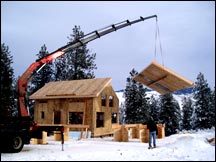 recycled and new materials including interiors and exteriors of paintable protective laminate, crown molding, ceiling medallions, gingerbread decoration (licensed from pre-existing designs?) and channels for electrical and plumbing.
  Let’s create a new industrial organization to design and produce these houses in or near New Orleans.
 and sales directions, subject to approval by a board of directors which would including local appointees approved by a blue-ribbon panel.